I plan the whole system before I cut the first inch
Drainage, access, sequencing, and load-bearing all get worked out before a bucket touches ground — the same way I architect software systems before writing the first line.
A working reference · prepared for The Boring Company
I'm an applied AI architect who also owns and operates an excavator, and has spent years doing real land development work on my own property and for others. This page exists to make that visible — not as a resume line, but as photographed, dated work.
Why this page exists: I'm applying to The Boring Company, where the work sits exactly at the intersection I've been operating in without a name for it — heavy equipment and site work on one side, software and applied AI systems on the other. Most of what proves the first half doesn't live on a resume. It lives in photos of finished grading, a machine with hours on it, and jobs that held up. This is that record.
Equipment
I own my primary machine outright and run it myself — sourcing, permitting, planning, and operating, start to finish, on every job below.
Land development work
All of this is the same job, in sequence: a rhododendron-choked roadside embankment at 215 Edmisten Rd, Blowing Rock, NC, cleared and cut into a vehicle-passable access road and camp bench, ending in a built utility structure and a set-up expedition tent. Every stage below was run solo — no subcontracted excavation.
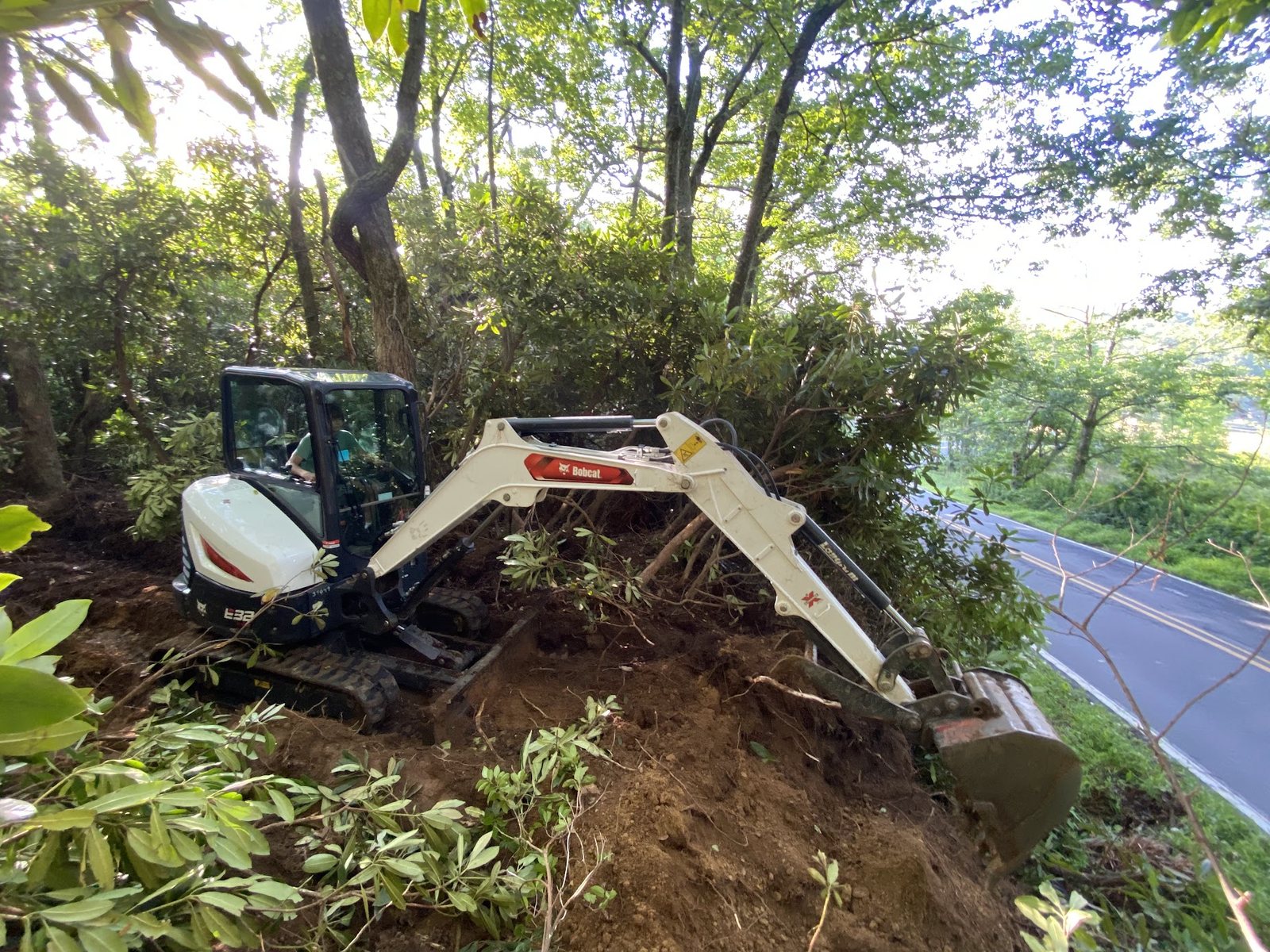
Stage 1 · Clearing the cut
Bobcat E32 working a rhododendron thicket on the roadside embankment — root balls and brush cleared to open the line for the access cut.
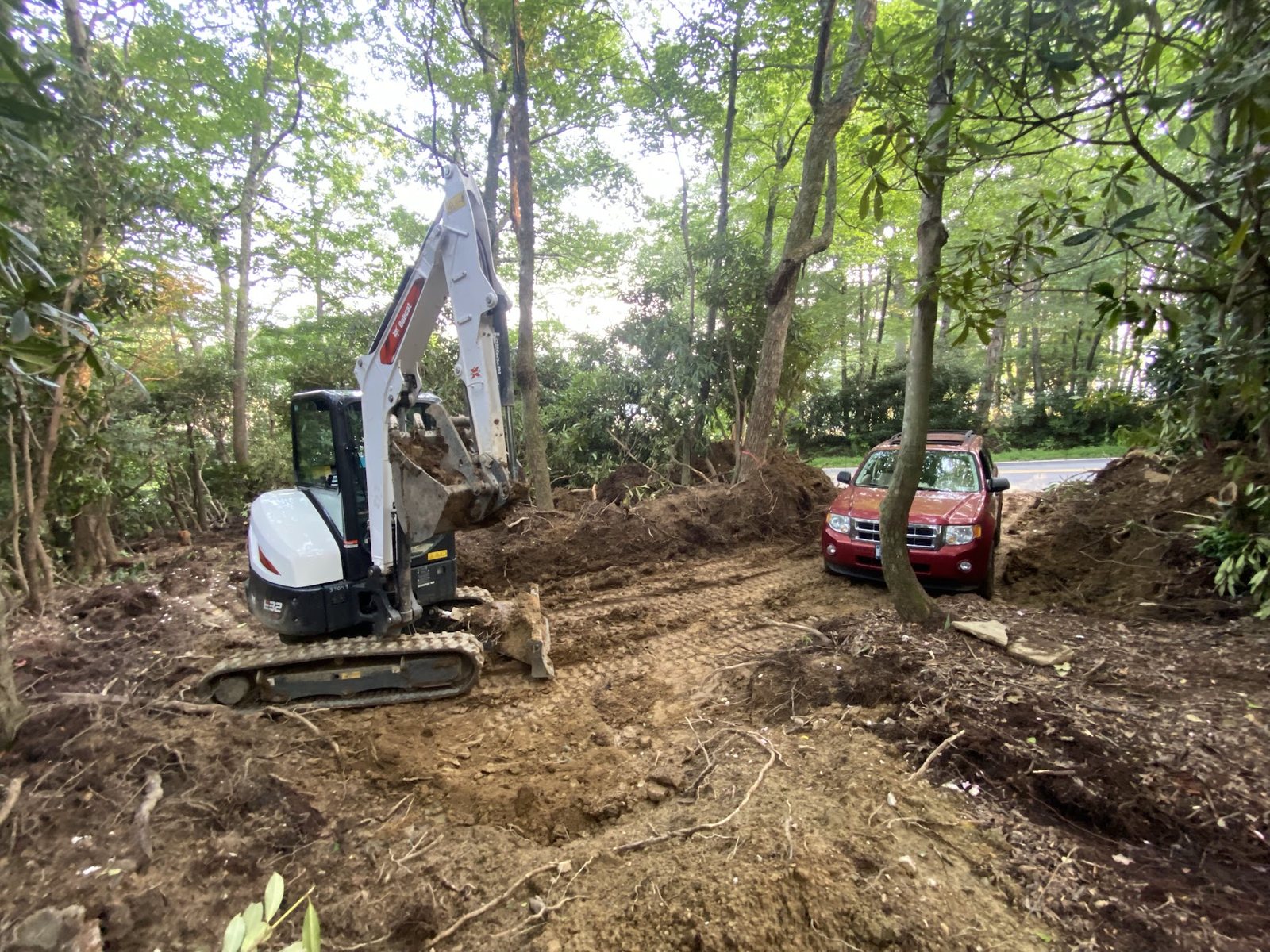
Stage 2 · Grading the pad
Same cut, graded to a flat, driveable bench — the SUV parked on it is the proof of load-bearing, compacted surface.
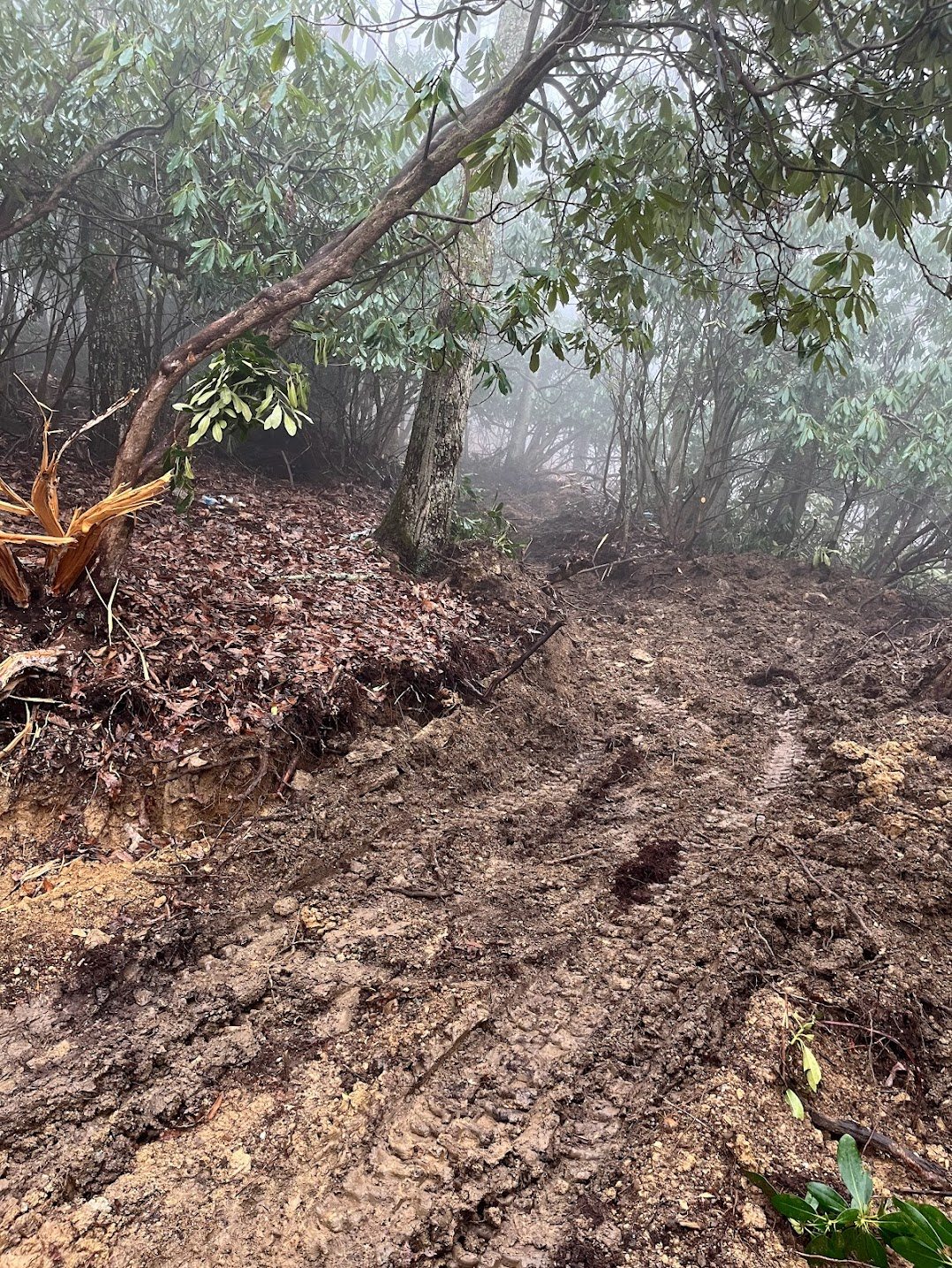
Stage 3 · Cutting the access trail
Pushing the road further up-slope through fog and root mass — the messiest, least photogenic part of the job, included on purpose.
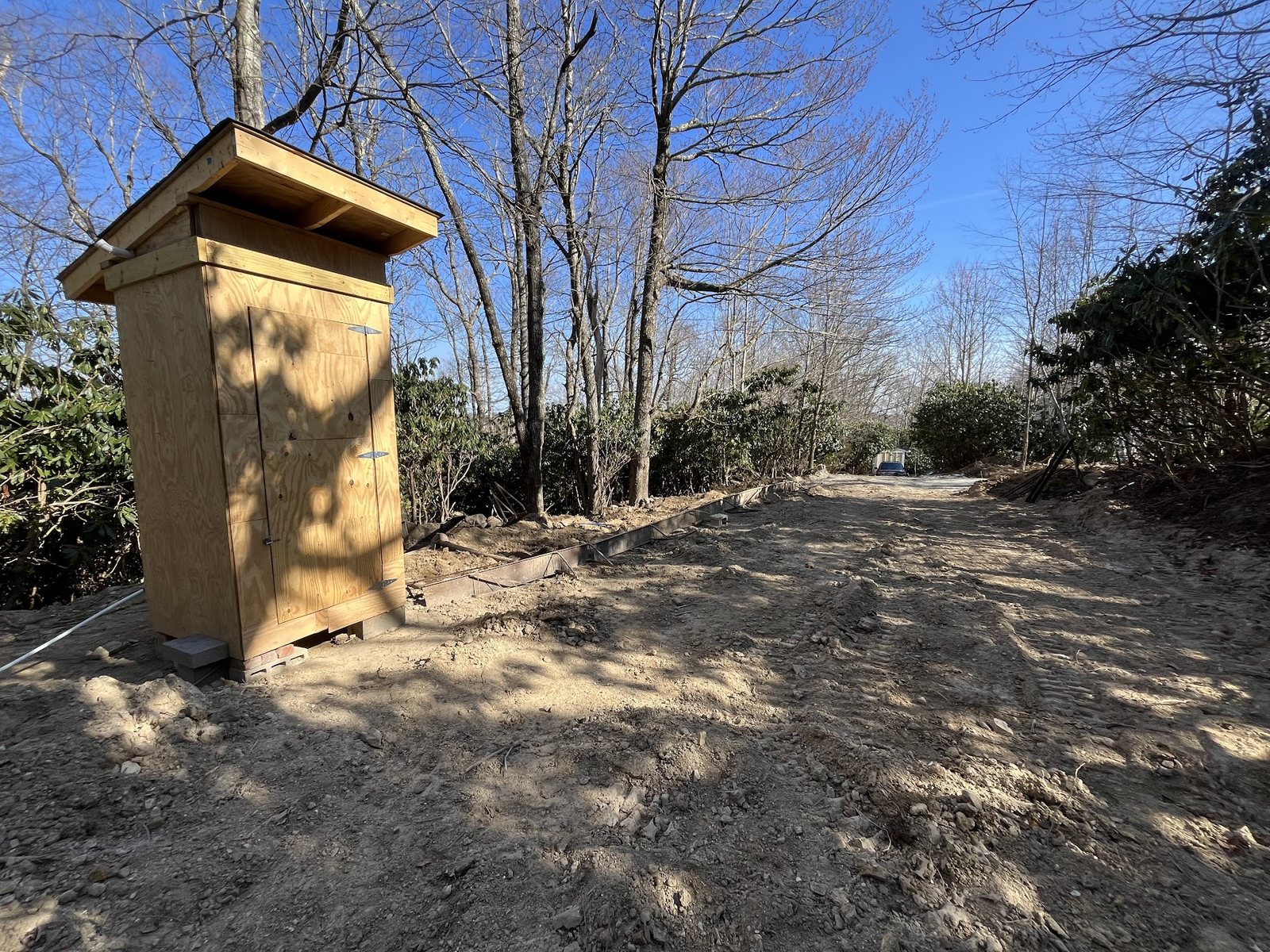
Stage 4 · Finished access road
Compacted, crowned, and holding — plus a framed-and-sided utility structure built alongside it, on-site carpentry beyond just excavation.
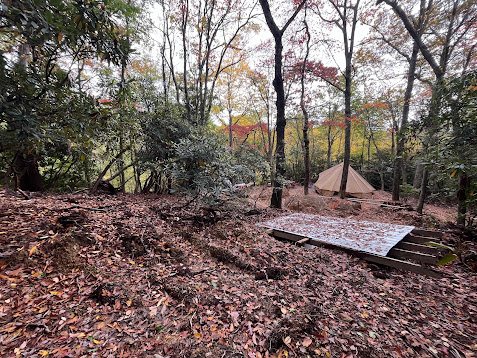
Stage 5 · Graded bench, drainage cut
Swales cut into the bench to route water off the pad before anything gets built on it — planned before it was needed, not after.
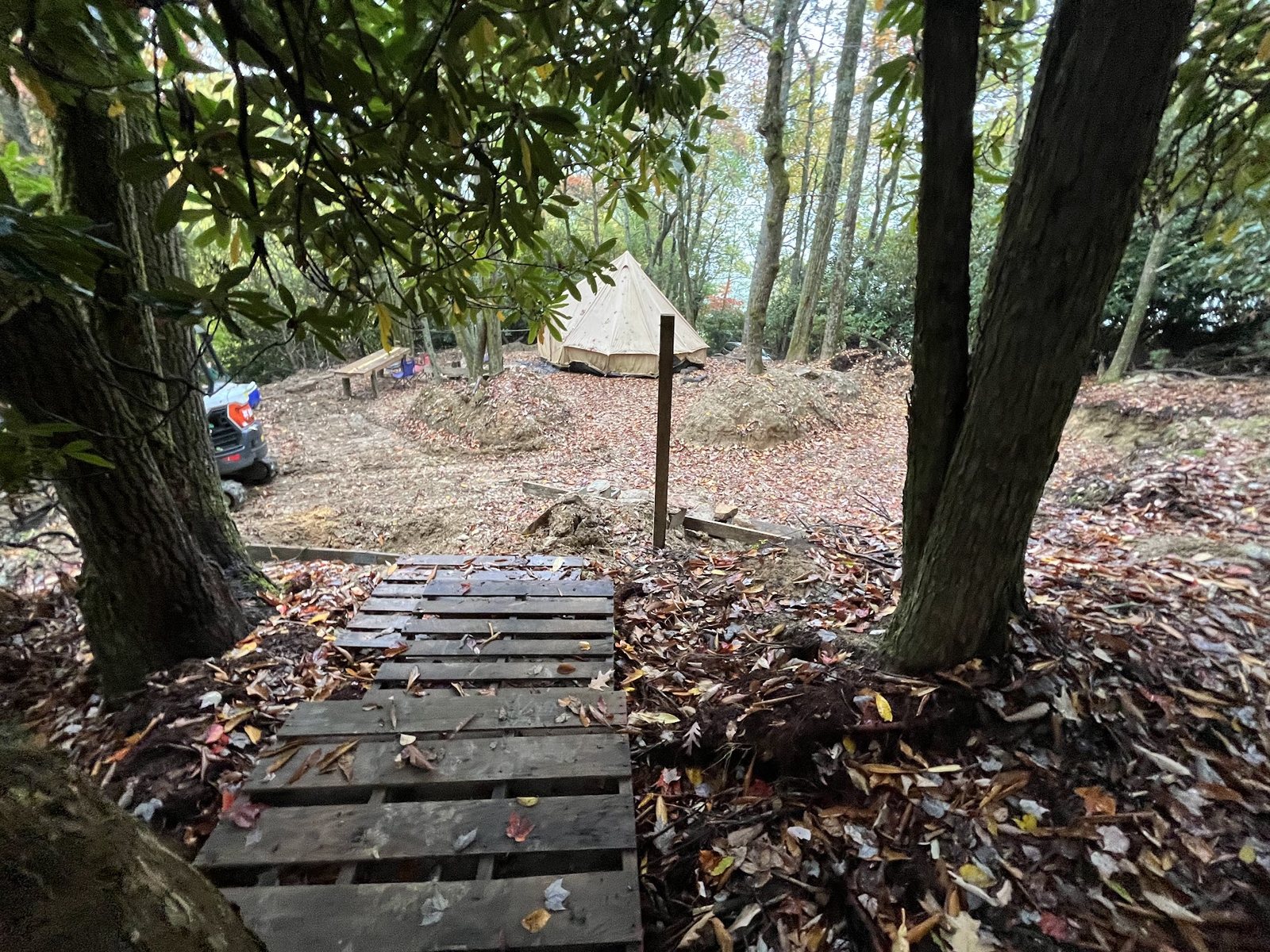
Stage 6 · Access down to the site
Reclaimed-pallet steps down the slope to the finished bench — camp seating and the tent already in place below.
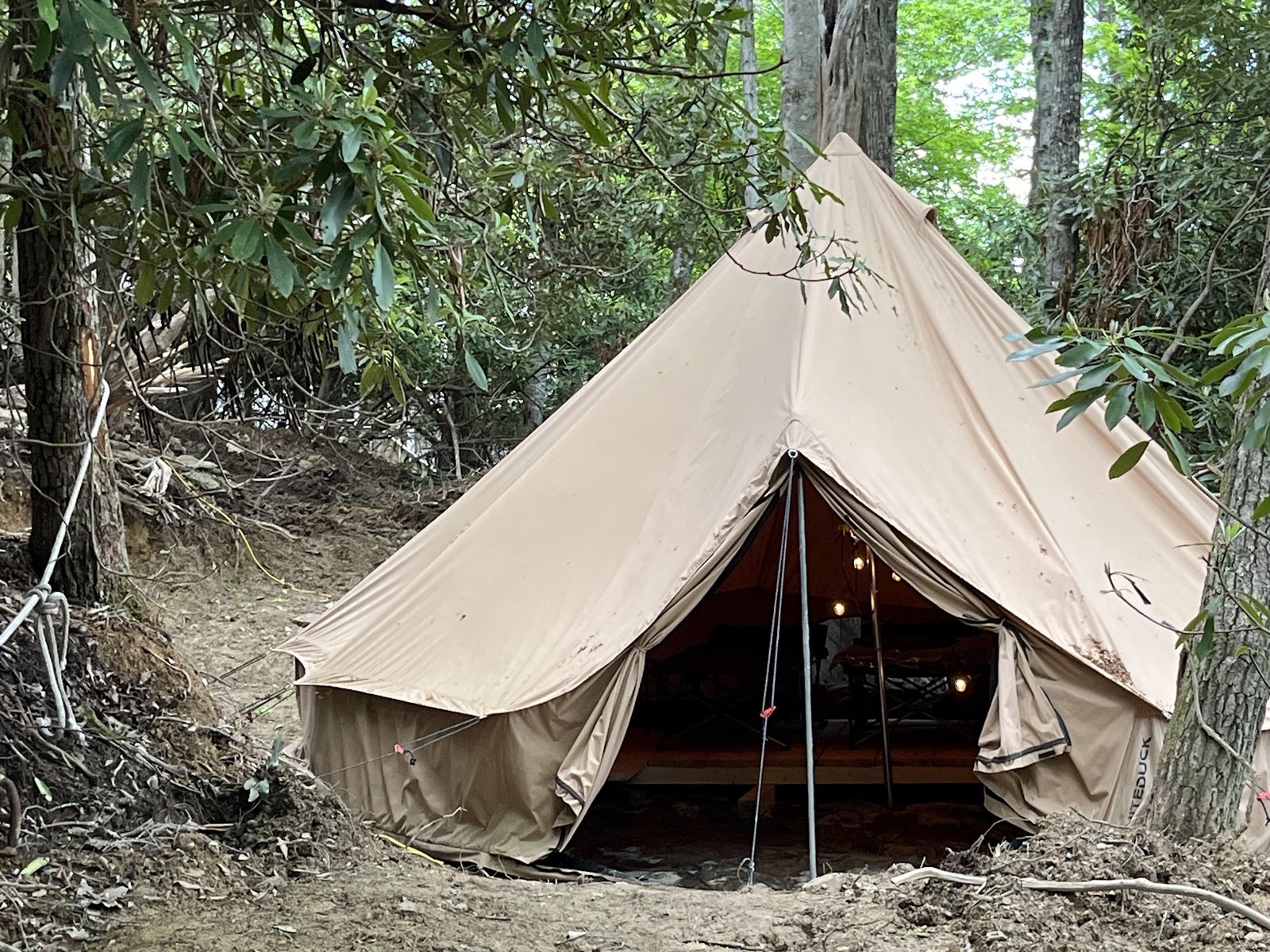
Stage 7 · Finished
The end state: a canvas wall tent on a built platform, on ground that was rhododendron thicket a season earlier.
Blowing Rock property — access road, clearing & camp site prep
Full-sequence solo job: cleared a rhododendron-choked roadside embankment, cut and graded a vehicle-passable access road up-slope, built a utility structure, then graded and drained a camp bench and set up an expedition tent platform. Ahead of the property's winter-excursion venture and the water/Fraser-fir ventures. No contractor crew, no subcontracted excavation.
Scope: 600ft of road, sloped terrain
Drip irrigation system
Full manifold design and install — supply line, pressure reduction, zone valves, trenched distribution. Photos pending.
Scope: 300 linear feet of trenching, 4 zones
Backyard pond
Excavated depression, rock-bordered terracing, sealing/lining method selected and installed. Photos pending.
Scope: slop-based rock pools/systems
Why this matters here
Drainage, access, sequencing, and load-bearing all get worked out before a bucket touches ground — the same way I architect software systems before writing the first line.
I've built the YSKAIPE product, codebase, and brand independently. The land work follows the same pattern: source the machine, learn it, run it, finish the job myself.
The hard problems in tunneling and land development are the systems around the cut — sensing, mapping, sequencing, verification. That's the exact discipline I bring from applied AI work.
Contact
Happy to walk through any of this in more detail, or point to the property and jobs directly.
Get in touch →
Nick Conenna · Peaking Waters LLC
Applied AI work ·
Writing ·
peakingwaters.com →